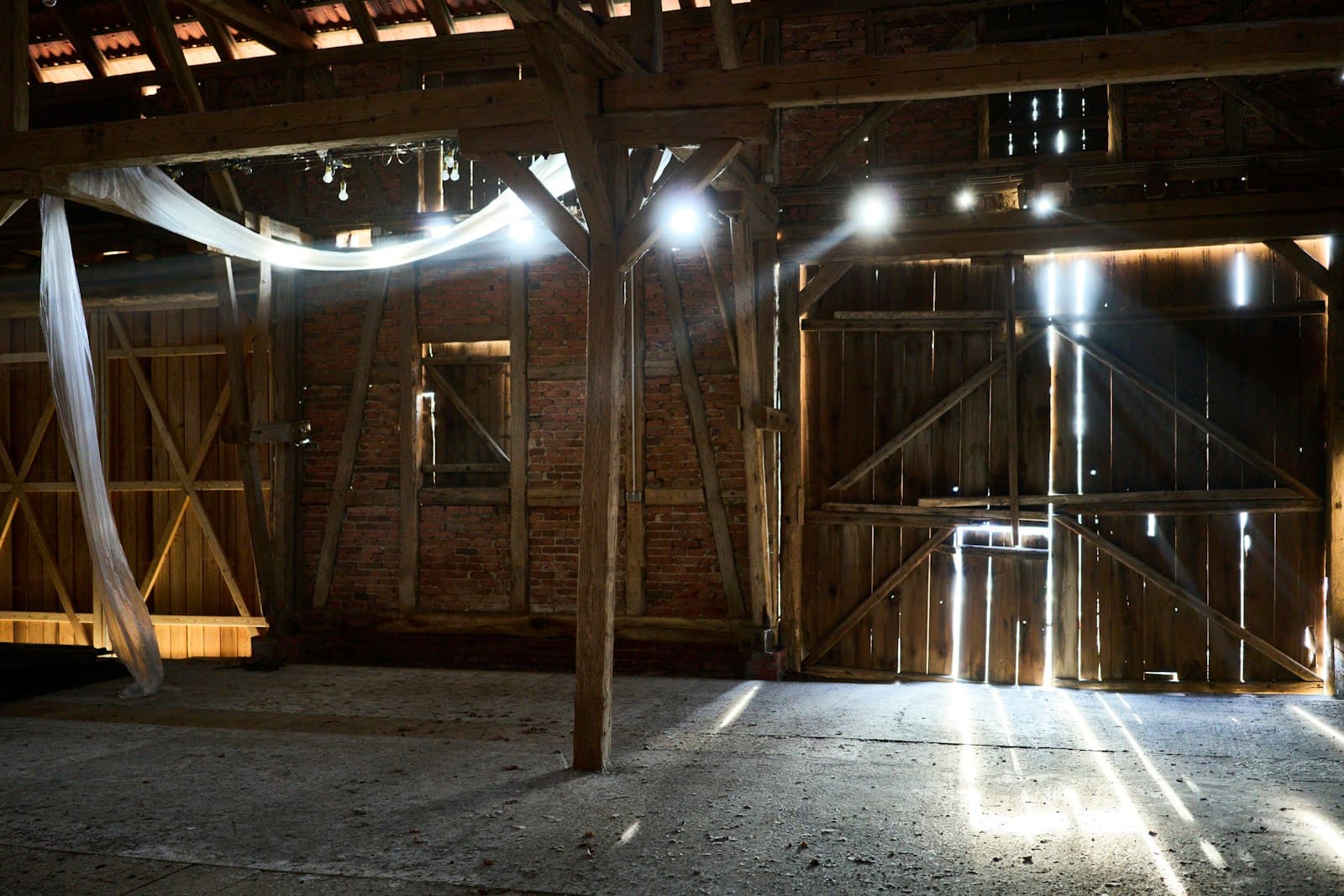
The Cooper barn went down in the ice storm of January 2025. Ninety years of standing, and a half-inch of ice on every surface brought it to its knees overnight. When I drove out to look at it, most of the frame was still intact — just folded over like a house of cards that someone breathed on.
The Coopers wanted it back. Not a new barn. Their barn. Same wood, same footprint, same view of the south pasture from the hay door.
**Salvage**
We spent two weeks pulling timbers. White oak doesn't rot easy, and most of the major posts and beams were sound. The sill plates were gone — ninety years of ground contact had turned them to sponge — but everything above the first course was usable. We numbered every timber, photographed every joint, and stacked everything under tarps in the equipment shed.
**Re-milling**
The timbers that needed new faces went through the sawmill. You could see the original ax marks under the weathered surface — this barn was built before portable sawmills were common. We kept the ax marks wherever they'd be visible in the finished frame. They're part of the story.
**The Raise**
We brought in eight people for the raise. Three days of work: two days assembling bents on the ground, one day standing them up. The moment the last bent went vertical and the ridge beam dropped into its pockets, Mrs. Cooper started crying. She said it smelled the same.
That's the thing about wood. It holds onto its history. The grain remembers the tree. The surface remembers the tool. And apparently, the smell remembers the barn.
**Details**
- Original structure: circa 1935, hand-hewn white oak
- Salvage rate: approximately 70% of original timber reused
- New material: white oak sill plates, some rafters, all roofing
- Raise crew: 8 people, 3 days
- Joinery: traditional mortise-and-tenon throughout