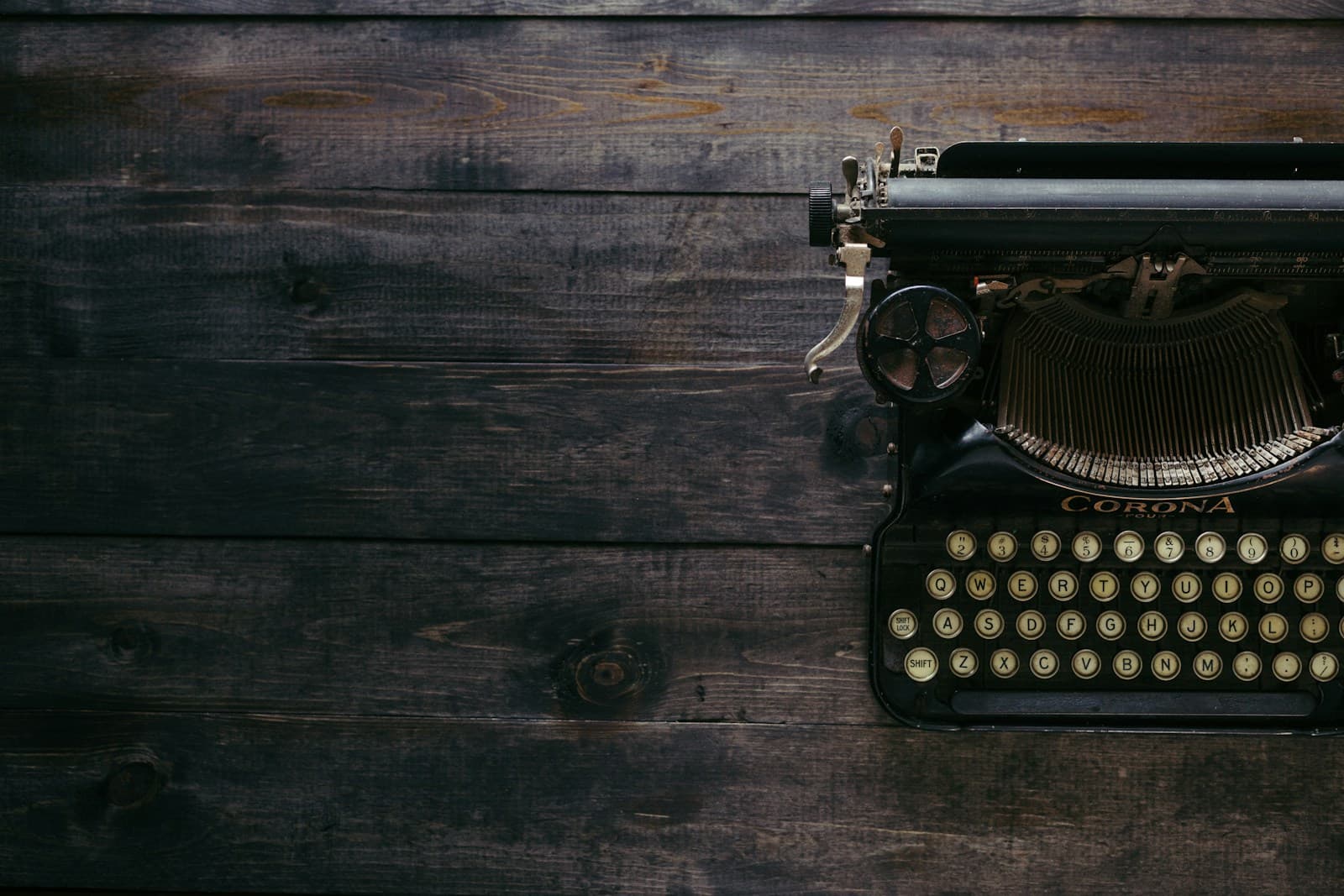
I bought a 1962 Olympia SM9 at an estate sale three years ago. Paid forty dollars. It sat on my bench for six months before I put paper in it.
When I finally did, I understood immediately why it had been waiting. The typewriter, like a hand saw, does not forgive. There is no delete key. There is no undo. Every letter is a commitment — struck into the page with mechanical force, permanent and visible.
This is exactly how dovetails work.
You mark the pins. You saw to the line. You chop the waste. And if you sawed crooked, or marked wrong, or let the chisel wander — it's there. In the joint. Forever. You can't sand your way out of a bad dovetail. You can't fill it and pretend. You either cut it right or you cut a new piece and start over.
The typewriter taught me the same discipline. Think before you strike. Mean what you put down. And if it's wrong, don't pretend — pull the page and begin again.
I write first drafts on the Olympia now. The prose comes out tighter. The sentences are shorter. Every word costs effort — mechanical effort, physical effort — and that cost makes me choose carefully.
Craft is craft. The medium changes. The discipline doesn't.