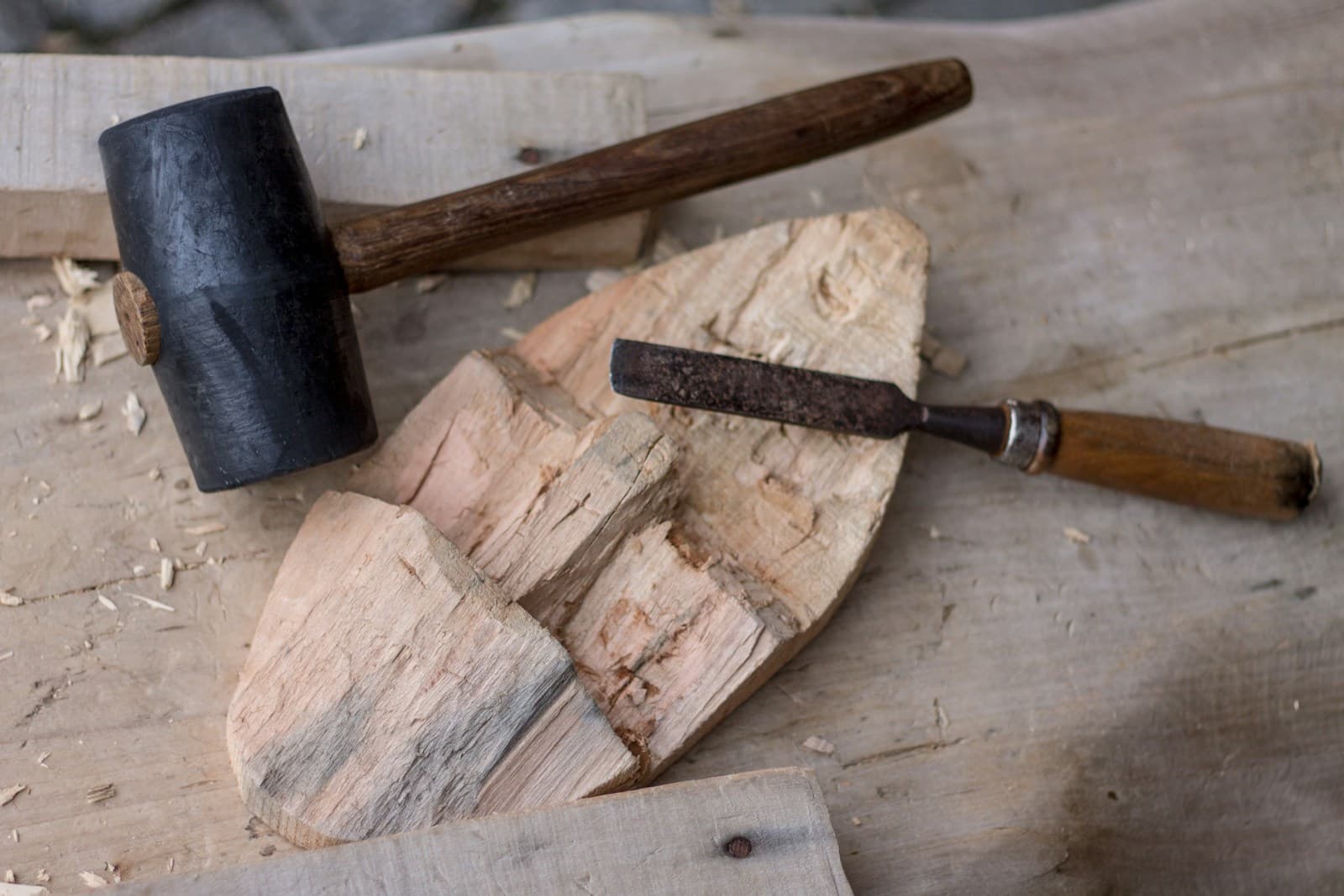
There's a moment, just before the chisel meets the wood, when everything else stops. The compressor isn't running. The radio isn't on. It's just the edge, the grain, and the question of whether you read the wood right.
I own a router. I own a domino joiner. I own every power tool that's supposed to make joinery faster, more repeatable, more efficient. And for production work — kitchens, built-ins, anything where forty identical joints need to happen before lunch — I use them.
But when I'm building something that matters to me, something with my name on it, I reach for the chisels. Not because hand-cut joints are stronger (they can be, but that's not the point). Not because they're more authentic (a word I've learned to distrust). I do it because hand-cut joints force me to pay attention.
A router doesn't care about the grain direction. It doesn't adjust for a knot. It doesn't feel the resistance change as the wood goes from sapwood to heartwood. It just spins at 22,000 RPM and removes material. The joint comes out perfect and identical and completely disconnected from the material it's cut into.
When I cut a mortise by hand, I'm reading the wood the entire time. The chisel tells me where the grain wants to split. The mallet tells me how hard the wood is today — because yes, wood hardness changes with humidity, with temperature, with how long the board has been off the stack. These aren't things you learn from a manual. You learn them from ten thousand cuts.
The joints I cut by hand are not perfect. If you look closely, you can see the chisel marks in the walls of the mortise. The shoulders might be a sixty-fourth off. But they fit — tight, square, and honestly made. And when I plane the surface flush, the joint disappears into the wood like it was always there.
That's what I'm after. Not perfection. Presence.